‘The problem with success is that you have to keep on being a success’ (Anon).
If your goal is to be a one-time success, to do well at one thing and give up in the rest, then you have a thwarted idea of success. Successful people have a strong desire to remain successful. They always believe in improvement. And that is the bedrock of consistency – having that strong faith that you can always do it again and again; and better and better.
According to John Mason, the road to success is always under construction. Men of success keep building but each time on a higher level. When you being to think you’ve had enough, your mind tells you it’s stupid to try more. Then you either reverse or turn around – anyhow, you start going back.
You should know that in this information age, you have to keep moving otherwise, others will move past you at such speeds that you begin to fall back steadily. Keep doing those good things. Keep modifying your ideas. Keep managing your successes and failures. Consistency is the greatest single factor that keeps you on top.
‘Big shots are only little shots who have kept on firing’.
Friday, August 31, 2007


Thursday, August 09, 2007
MEN THAT WILL SUCCEED 5: They Like Feedback
‘Feedback is the breakfast of champions’ (Anon.)
This is what success-minded people like. Dr. Mike LeBoeuf wrote in ‘The Greatest Management Principle in the World’ that the four most important words in American English are ‘What is your opinion?’ If you think that is not true then you must be a machine or a robot. You can’t ever be the best judge of what you do, observers are. That’s why most corporate bodies hang suggestion boxes in their reception lobbies. Even several authors now ask for feedback.
At times feedback could be cynical or discouraging. Whichever way, make the most of what people say about the things you do. With experience you will discover that most people that make cynical comments about certain things are those that have failed in those things. Or what do you expect a senior that failed a course to tell his junior? It’s either the course is irrelevant or the lecturer is bad!
‘He who can take advice is sometimes superior to him who can give it’ - Karl Ludwig von Knebel
Wednesday, July 18, 2007
MEN THAT WILL SUCCEED 4: They Cherish Integrity
"Wise men are men of their word. The quality of a man’s life is in direct proportion to the integrity and quality of his word." - Matthew Ashimolowo
You are only as good as your word. Being a successful person is not all about being comfortable or ahead of others. Can you be entrusted with money? Can you be taken at your word? I would rather be poor than live a liar. Honesty and integrity go hand-in-hand. “The test of your wisdom may be your ability to walk in honesty” (Matthew Ashimolowo).
Dishonest men have a problem: they have to struggle to remember what they said sometimes ago so that they don’t say something different now. Recent research has even shown that you burn much more energy when you lie. Your whole body system is also upset. That is exactly what the lie detecting machine exploits.
When falsely accused of extra-marital affairs by a certain woman with whom he had lived in the same neighborhood, Dr. Ben Carson had to depend on his honest way of life to maintain the confidence of his family and associates. Commit this to heart: one day, when the chips are down and everything seems to go wrong, then the strength of your integrity will determine your fate. Woe betide the man who, on such days, is found to be a fake.
"Hold integrity high, your life may one day depend on it" - John Mason
You are only as good as your word. Being a successful person is not all about being comfortable or ahead of others. Can you be entrusted with money? Can you be taken at your word? I would rather be poor than live a liar. Honesty and integrity go hand-in-hand. “The test of your wisdom may be your ability to walk in honesty” (Matthew Ashimolowo).
Dishonest men have a problem: they have to struggle to remember what they said sometimes ago so that they don’t say something different now. Recent research has even shown that you burn much more energy when you lie. Your whole body system is also upset. That is exactly what the lie detecting machine exploits.
When falsely accused of extra-marital affairs by a certain woman with whom he had lived in the same neighborhood, Dr. Ben Carson had to depend on his honest way of life to maintain the confidence of his family and associates. Commit this to heart: one day, when the chips are down and everything seems to go wrong, then the strength of your integrity will determine your fate. Woe betide the man who, on such days, is found to be a fake.
"Hold integrity high, your life may one day depend on it" - John Mason
MEN THAT WILL SUCCEED 4: They Cherish Integrity
"Wise men are men of their word. The quality of a man’s life is in direct proportion to the integrity and quality of his word." - Matthew Ashimolowo
You are only as good as your word. Being a successful person is not all about being comfortable or ahead of others. Can you be entrusted with money? Can you be taken at your word? I would rather be poor than live a liar. Honesty and integrity go hand-in-hand. “The test of your wisdom may be your ability to walk in honesty” (Matthew Ashimolowo).
You are only as good as your word. Being a successful person is not all about being comfortable or ahead of others. Can you be entrusted with money? Can you be taken at your word? I would rather be poor than live a liar. Honesty and integrity go hand-in-hand. “The test of your wisdom may be your ability to walk in honesty” (Matthew Ashimolowo).
Dishonest men have a problem: they have to struggle to remember what they said sometimes ago so that they don’t say something different now. Recent research has even shown that you burn much more energy when you lie. Your whole body system is also upset. That is exactly what the lie detecting machine exploits.
When falsely accused of extra-marital affairs by a certain woman with whom he had lived in the same neighborhood, Dr. Ben Carson had to depend on his honest way of life to maintain the confidence of his family and associates. Commit this to heart: one day, when the chips are down and everything seems to go wrong, then the strength of your integrity will determine your fate. Woe betide the man who, on such days, is found to be a fake.
"Hold integrity high, your life may one day depend on it" - John Mason
Wednesday, July 11, 2007
MEN THAT WILL SUCCEED 3.2: TIME IN AFRICA
Not long after posting yesterday’s piece I was engaged in some talks with a colleague in the office. We both wondered why the world seems to know little about success stories in Africa – as if there are none. My opinion was that we, in Africa, do not tell our stories to the world while the west has consistently done that. With that the discussion shifted to the question “Why” and my colleague’s opinion was that we are “shortcut-crazy” in Africa. We seem to want to get everything done “quick and good”. At the end of that discourse, I gained two insights.
First, the future of Africa depends greatly on this generation. It’s going to make a whole lot of difference what we teach ourselves and our children. When I remember Otabil Mensah’s allusion to the fact that the people of the British Isles became what they are by the power of time management: and the obvious gap between Africa and the west in terms of how time is valued, I conclude that perhaps the greatest skill that must be taught to this generation and the off springs therefore is the fundamentals of time management.
To my mind, it is clearly a cultural issue. Except for South Africa where the white people have clearly made a difference, I do not know of any of any of our cultures in Africa that is not hypocritical about the management of time. The Yorubas (South–Western Nigeria) for instance, have a lot of sound and inspiring proverbs about time. They say, for example, “Igba ara ni a n bura, enikan kii bu sango ni eerun”. Literally, this means that swearing is to be done at its right time, no one abuses Sango, the god of thunder during the dry season. The import of this saying is that the right thing should be done at the right time. Yet when you consider carefully the things these people spend their time on, you’ll be amazed: parties, gossip, socializing and excessive leisure.
In fact, one major problem that has plagued the public service in South-Western Nigeria is what people do with office time. And it defies ranks. I have visited offices where the most superior officers are the ones leading the time-wasting efforts. Again, people can leave their own work to burst in on another person’s time. Unplanned and unannounced visits - mostly fruitless and purposeless. ‘Mo kan ni ki n ki yin ni’ (I just thought to see how you’re doing) yet they stay with you for hours, feeling offended if you don’t spare your work to give them attention.
Sincerely, I believe there are certain parts of our beliefs and attitudes as a people that must change – how what we do with our time is one of them. It is time in Africa for a change. Every minute of our time must be made to count. While a few of us have already embraced this paradigm, we still require a critical mass. So much about that.
The second insight is about time investment. The average “shortcut-crazy” African wants to do outstanding things in no time. It does not happen anywhere. We have to learn and then teach our children to give time to all that we do; we need to take time off fruitless efforts and divert it into fruitful ones. It is equally important for us to know that every great achievement is like a tree, first planted then diligently watered till maturity. And that is where delayed gratification comes in. The best books take years to write; the richest people worked hard in obscurity for some time; the gold medalists trained hard for many years. For us to come out of our status quo we’re got to learn to invest our time now, that we may reap in years to come, the fruits of peace.
To the mind that craves for more, I recommend you read The State of Africa. The book, written by veteran journalist, Martin Meredith, chronicles the story of Africa since the 50’s. When I read it, I saw here and there, throughout our history, how we (or they?) squandered the past that brought us this present. Are we (or are you) going to squander this present again to give a poor future? My people, it’s time in Africa…
First, the future of Africa depends greatly on this generation. It’s going to make a whole lot of difference what we teach ourselves and our children. When I remember Otabil Mensah’s allusion to the fact that the people of the British Isles became what they are by the power of time management: and the obvious gap between Africa and the west in terms of how time is valued, I conclude that perhaps the greatest skill that must be taught to this generation and the off springs therefore is the fundamentals of time management.
To my mind, it is clearly a cultural issue. Except for South Africa where the white people have clearly made a difference, I do not know of any of any of our cultures in Africa that is not hypocritical about the management of time. The Yorubas (South–Western Nigeria) for instance, have a lot of sound and inspiring proverbs about time. They say, for example, “Igba ara ni a n bura, enikan kii bu sango ni eerun”. Literally, this means that swearing is to be done at its right time, no one abuses Sango, the god of thunder during the dry season. The import of this saying is that the right thing should be done at the right time. Yet when you consider carefully the things these people spend their time on, you’ll be amazed: parties, gossip, socializing and excessive leisure.
In fact, one major problem that has plagued the public service in South-Western Nigeria is what people do with office time. And it defies ranks. I have visited offices where the most superior officers are the ones leading the time-wasting efforts. Again, people can leave their own work to burst in on another person’s time. Unplanned and unannounced visits - mostly fruitless and purposeless. ‘Mo kan ni ki n ki yin ni’ (I just thought to see how you’re doing) yet they stay with you for hours, feeling offended if you don’t spare your work to give them attention.
Sincerely, I believe there are certain parts of our beliefs and attitudes as a people that must change – how what we do with our time is one of them. It is time in Africa for a change. Every minute of our time must be made to count. While a few of us have already embraced this paradigm, we still require a critical mass. So much about that.
The second insight is about time investment. The average “shortcut-crazy” African wants to do outstanding things in no time. It does not happen anywhere. We have to learn and then teach our children to give time to all that we do; we need to take time off fruitless efforts and divert it into fruitful ones. It is equally important for us to know that every great achievement is like a tree, first planted then diligently watered till maturity. And that is where delayed gratification comes in. The best books take years to write; the richest people worked hard in obscurity for some time; the gold medalists trained hard for many years. For us to come out of our status quo we’re got to learn to invest our time now, that we may reap in years to come, the fruits of peace.
To the mind that craves for more, I recommend you read The State of Africa. The book, written by veteran journalist, Martin Meredith, chronicles the story of Africa since the 50’s. When I read it, I saw here and there, throughout our history, how we (or they?) squandered the past that brought us this present. Are we (or are you) going to squander this present again to give a poor future? My people, it’s time in Africa…
Tuesday, July 10, 2007
MEN THAT WILL SUCCEED 3.1: They are time-conscious
‘Dost thou love life? Then do not squander time for that is the stuff life itself is made of' (Benjamin Franklin).
While planning involves prudent allotment of time, time-consciousness refers to the ability to know when time is going. Your destiny may depend on this seemingly un-important ability. Whether or not you will arrive on time for an interview, a contract bidding, an exam or even your wedding is dependent upon your consciousness of the time.
While planning involves prudent allotment of time, time-consciousness refers to the ability to know when time is going. Your destiny may depend on this seemingly un-important ability. Whether or not you will arrive on time for an interview, a contract bidding, an exam or even your wedding is dependent upon your consciousness of the time.
A man that knows when to start and when to stop will surely command respect. If anything bad will be said or written about you, let it not be ‘time-waster’. Let anyone that wants to make it know that life is an aggregation of time units which, once wasted can never be recovered. Athletes, especially sprinters would understand this better. A late start of one second might result in total failure.
In the 2004 Olympics at Athens, Greece, the British 4 x 100m relay anchor leg finished just 0.1s (a tenth of a second, less than enough time to blink your eyes) before Maurice Greene, the US anchor leg. Obviously, the difference between gold and silver could be as small as that! World female 100m hurdles champion lost out in the same Olympiad because she lost some seconds when she tipped and fell over her first hurdle. She just looked helplessly at the others as they forged ahead.
‘The present time is the raw material out of which we make whatever we will . . . Life is not lost by dying; life is lost minute by minute in all the … small uncaring ways’
- Sidney N. Bremer; Steve Benet
Monday, July 09, 2007
MEN THAT WILL SUCCEED 2: They are Passionate
‘Throw your hat over the fence and your whole body will soon follow’ (J. F. Kennedy).
Passion is all about giving your entirety into the pursuit of a cause. It means making commitments such that you can hardly turn back. Your passion determines your motion. Few things succeed that are not pursued with passion. ‘The person who makes a success of living is the one who sees his goal steadily and aims for it unswervingly’ (Cecil B. DeMille).
With passion comes focus; and with focus comes steady aim. Ask the best hunters around you and they‘ll tell you how important these things are. Sir Isaac Newton gave so much of himself to his researches that he left his supper untouched on many occasions. These missed suppers have all gone into the postulation of golden scientific principles as we have them today. Or what is physics without the Newton’s laws of motion?
Little John Kennedy strongly desired to get juicy apples from a tree which everyone considered inaccessible. ‘How do you go over a tall fence without footholds and you don’t even know what’s on the other side?’, everyone seemed to ask. John’s passion overcame him one day and guess what he did? He threw a precious hat of his over that fence and the rest is history. That’s where the quote at the head of this aritcle came from.
Where there is passion, possibilities are not for away.
Passion is all about giving your entirety into the pursuit of a cause. It means making commitments such that you can hardly turn back. Your passion determines your motion. Few things succeed that are not pursued with passion. ‘The person who makes a success of living is the one who sees his goal steadily and aims for it unswervingly’ (Cecil B. DeMille).
With passion comes focus; and with focus comes steady aim. Ask the best hunters around you and they‘ll tell you how important these things are. Sir Isaac Newton gave so much of himself to his researches that he left his supper untouched on many occasions. These missed suppers have all gone into the postulation of golden scientific principles as we have them today. Or what is physics without the Newton’s laws of motion?
Little John Kennedy strongly desired to get juicy apples from a tree which everyone considered inaccessible. ‘How do you go over a tall fence without footholds and you don’t even know what’s on the other side?’, everyone seemed to ask. John’s passion overcame him one day and guess what he did? He threw a precious hat of his over that fence and the rest is history. That’s where the quote at the head of this aritcle came from.
Where there is passion, possibilities are not for away.
Thursday, June 28, 2007
MEN THAT WILL SUCCEED 1: They are Readers
Hi. This is the first in the series of discourse I promised from my book-in-progress. For now, I will concentrate on delivering the content directly from the book. I welcome and would greatly appreciate your comments.
Reading is to the mind what exercise is to the body (Rick Steel)
One of the greatest assets of successful people is a developed mind. A man’s mind is developed mostly through reading. Men who have attained some high status in our society have constantly testified to the fact that leaders are readers. If any one desires to be an achiever, tell him he has to learn to read a lot.
Let me quickly point out that illiterate people are not half as disadvantaged as you may have believed. Like someone said, “In the twentieth century (and now we’re in the 21st) an illiterate is not necessarily one who is unlearned but one who is not willing to learn, un-learn and re-learn.” How true that is! Reading is not all about being able to decode what is put on paper; rather it involves the ability to make careful observations, meaningful inferences and correct interpretations of what is seen.
While I am not trying to excuse illiteracy or de-emphasize formal education, I am putting it to you that formal education is not equal to reading. “An educated man is not necessarily one who has an abundance of general or specialized knowledge. An educated man is one who has so developed the faculties of his mind so that he may acquire anything he wants, or its equivalent, without violating the rights of others.”(Napoleon Hill). If you despise reading, it’s going to be extremely difficult for you to make it in life.
“Today a reader, tomorrow a leader.” (W. Fussellman)
Reading is to the mind what exercise is to the body (Rick Steel)
One of the greatest assets of successful people is a developed mind. A man’s mind is developed mostly through reading. Men who have attained some high status in our society have constantly testified to the fact that leaders are readers. If any one desires to be an achiever, tell him he has to learn to read a lot.
Let me quickly point out that illiterate people are not half as disadvantaged as you may have believed. Like someone said, “In the twentieth century (and now we’re in the 21st) an illiterate is not necessarily one who is unlearned but one who is not willing to learn, un-learn and re-learn.” How true that is! Reading is not all about being able to decode what is put on paper; rather it involves the ability to make careful observations, meaningful inferences and correct interpretations of what is seen.
While I am not trying to excuse illiteracy or de-emphasize formal education, I am putting it to you that formal education is not equal to reading. “An educated man is not necessarily one who has an abundance of general or specialized knowledge. An educated man is one who has so developed the faculties of his mind so that he may acquire anything he wants, or its equivalent, without violating the rights of others.”(Napoleon Hill). If you despise reading, it’s going to be extremely difficult for you to make it in life.
“Today a reader, tomorrow a leader.” (W. Fussellman)
MEN THAT WILL SUCCEED 1: They are Readers
Hello. This is the first in the series of the discourse I promised to post from my book. For now, I'll just concentrate on delivering the content 'as is' without any additional
Tuesday, May 08, 2007
UPCOMING
The year 2007 is about halfway through; and I have watched with keen interest a lot of goings-on around me. From the 2007 General Elections to the choice of what my immediate neighbours eat, I have noticed in everything that MANY PEOPLE DO THINGS WITHOUT FULLY CONSIDERING THE CONSEQUENCES OF THEIR ACTIONS.
In the literature on success, one thing that cuts across - which in fact is like the golden rule of prosperity - is the principle of Cause and Effect. The timelessness and infallibiblity of this principle were perhaps the reason why Albert Einstein defined insanity as doing the same old things and expecting different results.
But then, the majority of people in the society live in near-absolute oblivion of this all-powerful principle. I just read yesterday in Robert Greene's Joost Elffers book 48 Laws of Power that you do not judge your enemies by their intentions but by the consequences of their actions. The lesson, for me, in that is to consider an enemy weak , though he looks strong, if his actions bear little consequence; and to consider him strong, though he looks weak, if his actions bear great consequences. In the same way, everything to do or say should be considered on the basis of the long-run consequences and not immediate implications. Regrettably, many people seem not to think like that!
Could that be the reason why the society seems to comprise more vanquished than victors? Might that explain why many work so hard and yet live below poverty line?
In the next few weeks, I intend to share parts of a book I have worked on since 2004. I believe the question of success is more than what we dream, it's more about how and what we think and do: ATTITUDE and ACTIONS. I challenge you, therefore, to look forward to ACTIONS OF SUCCESS-MINDED PEOPLE and put across your comments.
In the literature on success, one thing that cuts across - which in fact is like the golden rule of prosperity - is the principle of Cause and Effect. The timelessness and infallibiblity of this principle were perhaps the reason why Albert Einstein defined insanity as doing the same old things and expecting different results.
But then, the majority of people in the society live in near-absolute oblivion of this all-powerful principle. I just read yesterday in Robert Greene's Joost Elffers book 48 Laws of Power that you do not judge your enemies by their intentions but by the consequences of their actions. The lesson, for me, in that is to consider an enemy weak , though he looks strong, if his actions bear little consequence; and to consider him strong, though he looks weak, if his actions bear great consequences. In the same way, everything to do or say should be considered on the basis of the long-run consequences and not immediate implications. Regrettably, many people seem not to think like that!
Could that be the reason why the society seems to comprise more vanquished than victors? Might that explain why many work so hard and yet live below poverty line?
In the next few weeks, I intend to share parts of a book I have worked on since 2004. I believe the question of success is more than what we dream, it's more about how and what we think and do: ATTITUDE and ACTIONS. I challenge you, therefore, to look forward to ACTIONS OF SUCCESS-MINDED PEOPLE and put across your comments.
Friday, April 27, 2007
THERE ARE STILL THOUGHTFUL NIGERIANS
I was checking my mails today and I gor this mail from an old classmate of mine. Immediately I read through, one thing kept ringing in my mind: there are still thoughtful Nigerians; people who care what happens to us as a nation; people who are concerned about how we are treated. Take away all personal sentiments, the writer of this article just demonstrated the kind of attitude our leaders should have.
American Embassy Plc (By Sochima Ndu; Published: Monday, 26 Mar 2007)
I was sad when I read the account narrated by Mr. Hakeem Ogunniran, the Managing Director of
MDS – a Division of the UACN Plc, in the Saturday PUNCH of March 17, concerning the appalling, and indeed pathetic, treatment that was meted to his wife by the Canadian Embassy in Lagos. The Ogunnirans are not alone in the saga of ill-treatment of Nigerians at the hands of foreign embassies.
Top on the list of these notorious embassies is the American Embassy on Walter Carrington Crescent, Victoria Island, Lagos. The visa section of the American Embassy is the revenue generation unit of the element and I can imagine that, like any profit-oriented enterprise, they start the year with a target of revenue and profitability which they must generate at all costs. The modus operandi for extracting the targeted sums from Nigerians starts with the invitation forinterview. The embassy exploits the desires of many Nigerians to visit foreign countries while on holiday, broaden their knowledge by attending seminars and conferences abroad and yes, even explore their destinies in other countries, by inviting them for these spurious interviews. It seems that they count the applications and decide how many must come per day and how many must have to reapply for the targets to be met.
MDS – a Division of the UACN Plc, in the Saturday PUNCH of March 17, concerning the appalling, and indeed pathetic, treatment that was meted to his wife by the Canadian Embassy in Lagos. The Ogunnirans are not alone in the saga of ill-treatment of Nigerians at the hands of foreign embassies.
Top on the list of these notorious embassies is the American Embassy on Walter Carrington Crescent, Victoria Island, Lagos. The visa section of the American Embassy is the revenue generation unit of the element and I can imagine that, like any profit-oriented enterprise, they start the year with a target of revenue and profitability which they must generate at all costs. The modus operandi for extracting the targeted sums from Nigerians starts with the invitation forinterview. The embassy exploits the desires of many Nigerians to visit foreign countries while on holiday, broaden their knowledge by attending seminars and conferences abroad and yes, even explore their destinies in other countries, by inviting them for these spurious interviews. It seems that they count the applications and decide how many must come per day and how many must have to reapply for the targets to be met.
In most cases, the letters of rejection have already been prepared in advance of the interviews. The candidates are invited, not to be heard, but for their N14,000 which is vital to the income and expenditure account of the embassy. Does the upfront collection of non-refundable application fees by these embassies not qualify as a definition of advance fee fraud? Can these embassies not collect a lower amount as non-refundable processing fee (say N1,000), while the N14,000 could remain as a visa issuance fee taken only from successful applicants?
I heard the case of a medical doctor whose son gained admission into Princeton and visited the American Embassy for a visa. Apparently knowing the penchant of consular officers to make instant illogical decisions on visa applications, he arranged to be at the embassy on the same day (perhaps to renew his visitor’s visa) so he could lend his voice to his son’s student’s visainterview. The visa official questioned him as to why he wanted his son to study in America instead of in a Nigerian university. What right does that American have to determine where a man wants his children to go to school? The answer is very simple – how many of the staff of the American embassy studied in Princeton or Harvard? It irks them to think that Nigerians aredaring to exceed those mundane limits which they have set for us in their finite minds.
In my few years in the service industry, I have learnt that revenues are compensations for values which have been added to a customer’s life or business. The question that then arises is, what value is the American embassy (our typical example and the worst culprit) adding to the lives of Nigerians to justify the gargantuan amount of money that it milks from them? Is it the number of hours that people must spend in order to attend those grueling interviews? Is it the sheer rudeness of the security personnel at the embassy? Is it the degrading attitude of the insincere embassy staff? Where lies the value addition in all of this experience?
In today’s world of branding, where organizations of different characters are taking concerted steps to develop positive perceptions from the public relative to their brand image, the likes of the Canadian and American embassies are very brazen in their disregard for the views and perceptions of Nigerians. Or is that not the case?
In today’s world of branding, where organizations of different characters are taking concerted steps to develop positive perceptions from the public relative to their brand image, the likes of the Canadian and American embassies are very brazen in their disregard for the views and perceptions of Nigerians. Or is that not the case?
The truth is that what is being meted to the Nigerian citizenry is a direct reflection of the degree ofdisregard and disrespect that these people and their nations have for our country and our governments. They treat this country as a pariah and pay lip service to relationships.
They treat our leaders as clowns and show no modicum of respect for them. It is probably for this reason that even our leaders show no form of concern at the treatment meted to our citizenry. It seems normal to them. It is in this bizarre abnormality that the mystery lies. We have mortgaged every iota of self-respect for a fee and sacrificed our national destiny on the altar of greed and unabridged corruption. The Nigerian high commissions in other countries cannot even dream of conducting business in any manner near what these people do here. Their governments will shout to the high heavens. If our embassies do not crawl in penitence, they will blackmail, arm-twist, and threaten to bring down sanctions or even worse.
I call on the leadership of this country, in the spirit of the national anthem and the Nigerian pledge, to shake itself free from all apathy and protect its citizenry by standing up against the injustices and maltreatment which are handed down to Nigerians by all hostile foreign embassies operating on Nigerian soil.
Ndu writes from 23, Balogun Road, Ogba, Lagos.
Culled from the Punch Newspaper
Culled from the Punch Newspaper
Thursday, March 22, 2007
PURPOSE OF DESIGN
It's been quite some time since I put something up here. Challenges, as usual. I like to start here by re-stating that it matters little what we have achieved on earth, we have not succeeded unless we have fulfilled our PUPRPOSE OF DESIGN. By that I mean to say that the One who made us had something in mind when He did so; and unless we function in that pre-designed capacity, the best we would ever do will be sub-standard. I therefor make bold to say that TRUE SUCCESS EQUALS FULFILLING THE PURPOSE FOR WHICH WE WERE CREATED.
Two key things follow from that. One, there is a Being who created (and still creates). This is only stating the obvious because there can be no pattern without a designer. The intricate patterns observed in creation tells us there is a Master Designer. Two, there is a reason for everything.
Tuesday, February 20, 2007
UNIQUE THOUGHTS
It’s so amazing that another year is almost quarter way through now. I mean, only 6 weeks ago we all hailed ‘Happy New Year”, and here we are – almost at the end of the second month of that same year. Maybe more amazing is the fact that many folks are still preparing to get started; and more amazing still is the fact that many who have started don’t even know where they’re going. Even more amazing is the apparent confidence with which these folks are getting on JUST FINE – as if they can’t be more right.
I beg you to pause and think
Ø Have you started – on your goals, your dreams, your aspirations, your desires – this year?
Ø Are you sure you know where what you’re doing now will take you?
Ø Have you started – on your goals, your dreams, your aspirations, your desires – this year?
Ø Are you sure you know where what you’re doing now will take you?
Or better still, do you know why you want to do what you want to do?
Each time I’ve thought about these issues since the beginning of this year, no better illustration comes to my mind than Zig Ziglar’s experience as described by Tony Jeary in Success Acceleration (that’s the third book I’ve read this year, apart from my academic stuff).
According to Tony, Zig went to his gym one day and found the place so packed that he hardly found a space to park his car. It was even more serious inside the gym as the whole room was filled with people sweating it out on the machines.
According to Tony, Zig went to his gym one day and found the place so packed that he hardly found a space to park his car. It was even more serious inside the gym as the whole room was filled with people sweating it out on the machines.
Surprised, Zig approached the manager of the place to make enquiries about the sudden rush. The manager’s response was somewhat like this:
“It’s no problem, most of the people you see here are new, they’d be gone in about a month or two. It’s just the New Year resolution crowd.” (emphasis mine)
Two lessons I learned from this bit of experience. One, most people, in fact every average man/woman/child makes good decisions. Two, most people are gone in about a month or two. If you think it’s a fallacy, compare your church attendance figures on New Year’s Eve, New Year’s Day and last Sunday…
… And then the challenge … how many months will it take you to go?
Last year I raised the issue of the determinants of success and started by showing how, like mathematical equations, the value of one’s life is determined by the operator and the operand and not the constant. We’ll pick up from there and go on to see other dimensions of the matter … welcome.
“It’s no problem, most of the people you see here are new, they’d be gone in about a month or two. It’s just the New Year resolution crowd.” (emphasis mine)
Two lessons I learned from this bit of experience. One, most people, in fact every average man/woman/child makes good decisions. Two, most people are gone in about a month or two. If you think it’s a fallacy, compare your church attendance figures on New Year’s Eve, New Year’s Day and last Sunday…
… And then the challenge … how many months will it take you to go?
Last year I raised the issue of the determinants of success and started by showing how, like mathematical equations, the value of one’s life is determined by the operator and the operand and not the constant. We’ll pick up from there and go on to see other dimensions of the matter … welcome.
Thursday, November 16, 2006
DETERMINANTS OF SUCCESS
What determines the valve of a mathematical expression - the variable or the constant?
If you are familiar with mathematics, you will probably know that an equation comprises five main components: the equality and operator; and the variable, the constant and the result. In several instances, there is more than one of each of these components in an equation. Nevertheless, an equation still retains its basic form – the performance of some operation on some constant(s) and variable(s) to yield some result(s). LIFE IS JUST LIKE THAT. As we go about, we accept and make inputs into our existence, apply specific processes and then obtain results.
Now, let’s take a closer look at this equation concept and how it comes in useful to our discussion on SUCCESS. Consider the following expression:
y = x + 2
Let’s start by identifying the components. The variable is x which takes on any value we choose to give it; 2 is constant and does not change unless the entire equation changes; and y is the result which takes on the value of the result of the operation performed on 2 and x.
When x is 3, 2 remains 2 and y equals 5. When x becomes 4, 2 still remains 2 and y goes up to 6. If x drops to 1, y will also come down to 3 but 2 remains unchanged. Interestingly, if + changes to X and our variable x still takes on the value of 3, the result, y will be 6 as against 5 when the operator was +.
So let me ask again, “What determines the value of an expression?” Obviously it is the variable and the operator.
The LESSON?
Simple. The magnitude of the result of any endeavour depends on how large a variable is operated upon with the constant and what operator is used. We can then conclude that if we want higher results, we need to magnify our variables and change our operators.
I understand from sound teaching and experience that God does not change, that is, He is constant. Does that then mean that He does not influence our success as much as we do? The answer is YES? If you think of what He said to Joshua then you’ll probably agree.
Joshua 1:8
This book of the law shall not depart out of thy mouth; but thou shalt meditate therein day and night, that thou mayest observe to do according to all that is written therein: for then thou shalt make thy way prosperous, and then thou shalt have good success.
So, what you get out of your life depends directly on how much of yourself is added to God!. And then who’s the operator? You, your finances, your spouse, your job, your boss, your….just name it. As long as these things decide for you, don’t expect the best.
Summary: the principal determinant of success is you, yes, YOU and YOUR OPERATOR.
If you are familiar with mathematics, you will probably know that an equation comprises five main components: the equality and operator; and the variable, the constant and the result. In several instances, there is more than one of each of these components in an equation. Nevertheless, an equation still retains its basic form – the performance of some operation on some constant(s) and variable(s) to yield some result(s). LIFE IS JUST LIKE THAT. As we go about, we accept and make inputs into our existence, apply specific processes and then obtain results.
Now, let’s take a closer look at this equation concept and how it comes in useful to our discussion on SUCCESS. Consider the following expression:
y = x + 2
Let’s start by identifying the components. The variable is x which takes on any value we choose to give it; 2 is constant and does not change unless the entire equation changes; and y is the result which takes on the value of the result of the operation performed on 2 and x.
When x is 3, 2 remains 2 and y equals 5. When x becomes 4, 2 still remains 2 and y goes up to 6. If x drops to 1, y will also come down to 3 but 2 remains unchanged. Interestingly, if + changes to X and our variable x still takes on the value of 3, the result, y will be 6 as against 5 when the operator was +.
So let me ask again, “What determines the value of an expression?” Obviously it is the variable and the operator.
The LESSON?
Simple. The magnitude of the result of any endeavour depends on how large a variable is operated upon with the constant and what operator is used. We can then conclude that if we want higher results, we need to magnify our variables and change our operators.
I understand from sound teaching and experience that God does not change, that is, He is constant. Does that then mean that He does not influence our success as much as we do? The answer is YES? If you think of what He said to Joshua then you’ll probably agree.
Joshua 1:8
This book of the law shall not depart out of thy mouth; but thou shalt meditate therein day and night, that thou mayest observe to do according to all that is written therein: for then thou shalt make thy way prosperous, and then thou shalt have good success.
So, what you get out of your life depends directly on how much of yourself is added to God!. And then who’s the operator? You, your finances, your spouse, your job, your boss, your….just name it. As long as these things decide for you, don’t expect the best.
Summary: the principal determinant of success is you, yes, YOU and YOUR OPERATOR.
Saturday, October 28, 2006
S.U.C.C.E.S.S.
This 7-letter word is one of the most-desired qualifications under heaven. I've not come across anyone who doesn't want to be referred to as successful. Ironically, I have come to realise that as absolute as it is, a significant percentage of people reason that success is relative. "It depends on what we're talking about", they think or say.
I posit, however, that success is absolutely absolute. One is either a success or a failure, no midland. And to think it is relative; relative to what?
Simply put, success is ACHIEVING PURPOSE OF DESIGN. Whatever it is that does well in a purpose for which it is not designed is only subjectively successful. That is, it is only successful in the sight of onlookers who will have no say in its final assessment.
An example: A pen is meant to leave indellible marks while a pencil is made to leave temporary, erasable marks. I bet no one would buy a pencil that leaves marks that an eraser can't handle; and when the marks of a pen is easily erased, it has failed even though it still makes its marks!
It means, to me therefore, that your success is independent of
whether or not you're rich
whether or not you're powerful
whether or not you're long-lived
So what does it depend on? This is one question I can't answer alone. Don't hesitate to leave your comments on this issue (it tkaes a few moments) as we consider it for the next few weeks.
Monday, October 23, 2006
MY POWER WORKS BEST IN YOUR WEAKNESS 2CORINTHIANS 12:9
At 19 months, Helen Keller contracted the illness that eventually left her without hearing and sight. Back then those labelled deaf and dumb were classified as idiots. But Helen’s parents didn’t agree. They hired teacher Anne Sullivan to work with her and eventually she learned to read and write using Braille. Amazingly, in 1904 she graduated with honours from Radcliff College, and then devoted her life to helping others. Philanthropist Andrew Carnegie paid her an annual income; writers Mark Twain and Robert Louis Stevenson praised her and almost every President of her day invited her to the White House. When asked if there was anything worse than being blind she replied, “Yes, having sight but no vision.”
At 12 Thomas Edison developed such severe hearing loss that his teachers recommended he be taken out of school. Instead, Edison used his handicap to drown out distractions and focus on his work. As a result, the boy who was labelled a slow learner gave the world over 1,000 inventions, including the light bulb, the phonograph and the motion camera.
Who gets to define normal anyway? Is it being short versus tall, or rich versus poor? The truth is God’s given all of us unique abilities that He expects us to explore. And interestingly, the real handicaps don’t belong to those who are born with physical and mental challenges. No, they belong to the so-called normal people who’ve accepted lethargy and limitation as part of life.
God said, “My power works best in your weakness”; so you can let your difficulties impede or inspire you. Which will it be?
At 12 Thomas Edison developed such severe hearing loss that his teachers recommended he be taken out of school. Instead, Edison used his handicap to drown out distractions and focus on his work. As a result, the boy who was labelled a slow learner gave the world over 1,000 inventions, including the light bulb, the phonograph and the motion camera.
Who gets to define normal anyway? Is it being short versus tall, or rich versus poor? The truth is God’s given all of us unique abilities that He expects us to explore. And interestingly, the real handicaps don’t belong to those who are born with physical and mental challenges. No, they belong to the so-called normal people who’ve accepted lethargy and limitation as part of life.
God said, “My power works best in your weakness”; so you can let your difficulties impede or inspire you. Which will it be?
courtesy Grace So Amazing Foundation
Friday, October 20, 2006
DESPITE ALL THESE THINGS…ROMANS 8:37
Composer Gian Carlio Menotti said, “Hell begins the day God grants us a vision of the gifts we’ve wasted, of all we might have done but we didn’t do.
Wilma Rudolph, who won three gold medals at the 1960 Olympics, would agree. What she accomplished isn’t as impressive as what she overcame. As a child Willie contracted polio and couldn’t walk without braces. Then at age 13 she regained the use of her legs and went on to become the fastest woman alive. But her challenges weren’t just physical. One of children born to a poor black family, she inspired us by transcending poverty and racial animosity. She said, "I can’t" has never been in my vocabulary.
At age two, Scott Halton, another famous Olympian skater, stopped growing because of a childhood illness that almost killed him. But his parents encouraged his rehabilitation by teaching him to skate; and the rest is history!
In 1976 when Brad Parks was injured in an accident that left him in a wheelchair, he strengthened his arm by whacking tennis balls against his garage door. Three years he formed the National Foundation of Wheelchair Tennis.
Paul said despite all these things victory is ours through Christ.
Rick Warren writes: Why does God use our weaknesses? Because when He does, He gets all the glory.
If God only used your strengths, others would look at you and be jealous or discouraged. But when God uses you in spite of your weaknesses they realise God could use me too! Your weaknesses aren’t an accident. God allowed them for the purpose of demonstrating his power through you.
courtesy Grace So Amazing Foundation
Thursday, October 12, 2006
What Do You See?
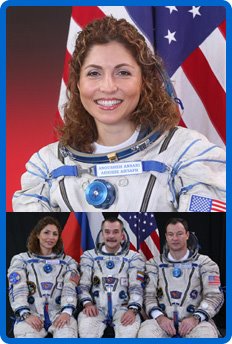 Usually when things appear, different people see them in different lights and from different angles. The same occured in the case of Anousheh Ansari, history's first female space explorer and Space Ambassador. Majority of the comments that trailed the expedition were quite negative. I wondered, after seeing a few of those comments yesterday evening, why God created us not to see things the same way. "For God's sake," I thought, "why would anyone have problems with that charitable young lady who decided to pioneer for us what we would otherwise find hard to imagine."
Honestly, I think we have a right to what we think and say, but in doing that, we'd do better to be a bit more reflective. I like you to go through what one of the masterminds of Anousheh's expedition wrote - and think deeply. Take with that the post on tempers that I placed sometimes ago, and then you'll see what I mean: WHILE YOU HAVE A RIGHT TO YOUR OPINION, YOU SHOULD KNOW THAT IT IS INFLUENCED BY WHAT YOU SEE; AND SINCE YOU CAN'T SEE EVERYTHING, SOMEONE WILL ALWAYS HAVE A SUPERIOR OPINION. THE MOST MATURE PEOPLE ARE THOSE WHO TAKE THINGS OBJECTIVELY.
---------------------------------------------------------------------------------------------------------------------------------------
Peter @ 11:20 pm
This is for anyone who might be critical of Anousheh’s flight — even though it’s a small percentage of the discussion here.
First of all, I need to say that Anousheh and her family are among the most thoughtful and generous people I have ever met.
When someone spends their money to purchase artwork or fancy automobiles, I don’t hear the outcry of “how could you spend your money in that fashion.” The fact is that Anousheh’s support of private spaceflight is not a whim, but the fulfillment of a dream that will yield very positive long-term implications for humanity.
Stop to think about the wealthy adventurers of the 18th Century who spent their money to venture across the Atlantic, or the wealthy clients who purchased the first airplanes or airline tickets. Today most of us living in the US don’t stop to thank those early trans-Atlantic adventurers for risking their lives and their wealth to open the Americas.
Do you thank the first “aeronauts” every time you purchase a low-cost Southwest or EasyJet airline ticket? Yet you benefit from their investment. How about everyone looking at this blog on your computer… The first computers cost millions.
The bottom line is all of the “Breakthroughs” we have today were at one point expensive, dangerous and difficult. We take this for granted now, but each of these industries began with pioneers.
Thank you Anousheh for making the investment, for taking the risk and for being a pioneer. Hundreds of years from now when Earth is benefiting from the resources of space, when millions of humans are living beyond low-Earth orbit, you will be remembered for taking some first steps and showing us the way.
Tomorrow, Oct 4th, 2006, on the second anniversary of the Ansari X PRIZE win, we will announce our next $10 million X PRIZE for Genomics. This competition will be for rapid genome sequencing, a technology that will literally revolutionize medicine and increase the quality of life for millions of people. The X PRIZE Foundation was able to create this prize in part because of the Ansari Family’s generosity. Had they not funded our first prize, we’d never be doing a follow-on!
Peter H. Diamandis (Chairman & CEO, X PRIZE Foundation, Washington, DC)
Tuesday, October 03, 2006
WHAT'S FOR INDEPENDENCE?
On October 1st 1960, the Union Jack was brought down in Nigeria and the "green-white-green" was flown. Today, 46 years after, the Nigeria that we know is far from it used to be. Many reasons have been advanced for the downward trend this nation has suffered over the years but it all boils down to one thing: POOR LEADERSHIP. And that's what has made the difference between us and the United States, for example.
I was not there but I was told and I've read that the quest for independence cost us so much as a nation. It is unfortunate, however, that we are now our own taskmasters despite the price we paid to free ourselves from the foreigners. The extent of steady decadence over the years, and the fact that many of us in this generation were born into it, has led many Nigerians to believe (erroneously, though) that Nigeria "ko le dara mo" (can no longer be good).
I am one Nigerian who sees a bright future for this land and in spite of all, I'm always quick to say "THINGS ARE GETTING BETTER." I am so excited about it and I believe every Nigerian should. NIGERIA IS WORKING AGAIN AND IT SHALL WORK EVEN BETTER; the truth, as I believe, is that WE HAVE TO JOIN HANDS TO MAKE IT WORK with the FAITH that our fatherland WILL work again. WHETHER WE THINK IT CAN OR WE THINK IT CANNOT, WE'RE RIGHT.
For you to know that I'm not a lone ranger on this path, I give to you a text message on January 2nd, 2006 at 3:22pm
This is to wish you a fulfilling 2006.
May we live long enough to witness
A Nigeria where Power Holding (NEPA)
Will announce before a 5-minute interruption
Where our streets will be gleaming with bitumen
Where our able-bodied will choose
The type of work to do
Where the disabled will live
Without having to beg
Where tummy tuck can be done
At our Community Health Centres
Where we shall have surplus
That we initiate immigration programs (visa lottery)
Where our young shall die at the age of 80
Where no man shall sleep with a woman/lady
In order to make ends meet
But out of love/choice
Where our brothers/sisters overseas
Shall come back home
Not out of ill-luck or failure
But because they will be left out
Of civilisation if they fail to do so
Where we shall not ride okada for a living
But power bikes for Formula One
Where we shall look forward to retirement
Because it's sweet
DID I HEAR "AMENS?"
That piece was sent to me by EMMANUEL OLUWATOSIN, a product specialist with Globacom
Friday, September 29, 2006
THE BE-KNOW-DO OF LEADERSHIP
Yesterday I gave you an article by one brilliant Nigerian as an emphasis on my opinion on the current rift between our leaders and how it sharply contrasts with what obtains in the more mature world. The issue, like I raised yesterday, is that there are certain qualities every leader must possess- qualities that carry the essence of leadership. One of these is Finesse which we mentioned already. In what follows here, I just want you to have a synoptic understanding of what makes a leader good.
- BE a professional. Examples: Be loyal to the organization, perform selfless service, take personal responsibility.
- BE a professional who possess good character traits. Examples: Honesty, competence, candor, commitment, integrity, courage, straightforwardness, imagination.
- KNOW the four factors of leadership - follower, leader, communication, situation.
- KNOW yourself. Examples: strengths and weakness of your character, knowledge, and skills.
- KNOW human nature. Examples: Human needs, emotions, and how people respond to stress.
- KNOW your job. Examples: be proficient and be able to train others in their tasks.
- DO provide direction. Examples: goal setting, problem solving, decision making, planning.
- DO implement. Examples: communicating, coordinating, supervising, evaluating.
- DO motivate. Examples: develop moral and esprit in the organization, train, coach, counsel.
Subscribe to:
Posts (Atom)