Pages

Showing posts with label TRUE LIFE. Show all posts

Sunday, January 09, 2011

No excuse, really

It's about 5am and I've not slept a bit since last night. Doing what? Studying, reflecting and thinking. My attention was also partly on the TV - CNN precisely. The news of the Tucson, Arizona mass killing that took place yesterday had lingered almost all night. When I heard the name of the suspect for the first time at 5:09am, I typed it into my search engine and got hundreds of thousands of hits - from the relevant to the downright nonsensical. One of the top hits had a profound effect on me. There was already a full-blown wiki page complete with detailed references! 

'How could anyone have done this so quick?' I asked myself. 
'Well, it's the information age,' I answered myself.

And that is really true; that wiki page demonstrates the power and speed of information in this age that we live in for two important reasons:

  1. On most interest websites or information portal, someone is responsible for updating content for some pecuniary gains. On Wikipedia, to the best of my knowledge, that does not happen. It's an 'open day' so if something comes up on wiki, it must mean that an interested person simply put it there.
  2. Considering that the event occurred at about 1700hrs GMT (and I am writing this approximately 12 hours later), the wiki page came up in record time, kind of.
So what am I getting at? Whatever information you need to move forward this year, believe it or not, someone has put it out there. And every piece of knowledge you require is readily available because now people talk about things as they happen. If you did not realise it before, well, I am now telling you that 'thou art inexcusable, o man.' Just look around and you'd get all the knowledge you need. But like I did with that piece of news, you've got to look; things don't just happen, people make them! So if your typical excuse is still along the lines of 'I don't know...' then my news for you is that 'you have no excuse, really.'


Monday, July 10, 2006

FANNY J. CROSBY: Tell Me The Story Of Jesus

The next time you sing an old, familiar hymn, look at the small print at the bottom of the page, and you probably will read the name of Fanny Crosby. Throughout her long career, she wrote more than 8,500 gospel songs and hymns, many of which are still popular today. "To God Be The Glory," "Praise Him, Praise Him," "Tell Me The Story Of Jesus," "I Am Thine O Lord"—every song is a testimony of her love for Jesus Christ. However, this gifted poet, unknown to many, could not actually see light. She was totally blind.
In May of 1820, when she was six weeks old, she caught a cold, and her eyes became slightly inflamed. The regular physician in Putnam County, New York, was out of town, and a man posing as a doctor gave her the wrong treatment. Within days, her eyesight was destroyed, and the man fled town in a panic. Fanny was never bitter about the stranger's intervention. "I have not for a moment in more than eighty-five years felt a spark of resentment against him, because I have always believed...that the good Lord...by this means consecrated me to the work that I am still permitted to do."
Her devoted Christian parents raised Fanny to be a confident, happy child. She dressed herself, did her own hair, and had impeccable table manners. Known for being a mischief, Fanny spent as much time as possible climbing trees, riding horses, and playing practical jokes on her many friends. One of the strongest influences in Fanny's childhood was her grandmother. An intelligent and patient woman, she took Fanny on nature walks, describing every bud and leaf in meticulous detail. She exposed her to great literature and poetry. Most importantly, she read her long passages from the Bible every day. Even with such attentive teaching, Fanny's thirst for knowledge was not satisfied; her mind was phenomenal. Before she was ten years old, she had memorized most of the New Testament and more than five books of the Old Testament. However, since schools at that time were not equipped to teach blind children, she was unable to receive a regular education.
Fanny knelt with her grandmother beside her rocker and prayed: "Dear Lord, please show me how I can learn like other children." It wasn't long before her mother gave her the exciting news about an opportunity to attend the New York Institute for the Blind. Within the year, she was their best student and after graduation became a teacher. As she grew, poetry became her passion, and she filled every spare moment with writing verse. By the time Fanny was twenty, she was famous throughout New York and a sought-after speaker for poetry recitations and official ceremonies. In spite of this popularity, she still felt something was missing from her life, and it took a severe cholera epidemic in 1849 to show her what that was. More than half of the students at the Institute died, one of them in her arms. After helping to nurse the sick for months, she almost succumbed to the disease herself and fled to the country.
The deaths of those close to her shook Fanny greatly. Deep in her heart, she knew she was not ready to die. On November 20, 1850, Fanny knelt at the altar at a local revival and gave her heart to Jesus. Biographer Basil Miller tells her response: "For the first time I realized that I had been trying to hold the world in one hand and the Lord in the other," she said. Finally, the God of her grandmother had become real to her. Her poetry immediately reflected this change in her heart, and songs of praise took the place of regular poems. When she met the Christian composer William Bradbury in 1864, the friendship was almost instantaneous. Bradbury furnished the tunes for many of Fanny's hymns; and though she worked with several composers, their partnership was the most enduring.
Fanny usually composed dozens of songs in her head before dictating them to a secretary, but no matter what she created, she used the same approach. The book More Than Conquerors tells what she said about her method: "It may seem a little old-fashioned, always to begin one's work with prayer, but I never undertake a hymn without first asking the good Lord to be my inspiration." She had more speaking invitations than she could keep, and famous men such as President Polk called on her often. With so many friends and associates, she was never lonely. Then in 1858, God brought a special man into her life, the blind musician Alexander Van Alstyne. They were married forty-four years and had one child, who died in infancy.
Even in her later years, Fanny stayed as busy as ever, and not just with song writing. Always on her heart were those less fortunate, and she volunteered much time at local ministries. Whenever someone approached her with a question or need, she witnessed to them one-on-one and shared the light of God's Word. Fanny died peacefully in her home in Bridgeport, Connecticut, on February 12, 1915. The crowds at her funeral were a testimony to the wide-spread influence she had for the Lord. These words from one of her final hymns express the foremost hope of her life: "And I shall see Him face to face and tell the story - saved by grace."

Monday, June 26, 2006

TRUE LIFE STORIES part three: W. PAGE PITT

Page Pitt was someone who should have failed. From all indications, it was easier for him to resign to fate and failure but instead he succeeded. After losing 97% of his eyesight at age 5, he refused to go to a school for the blind. He was accepted into public school where he played baseball and football. Remarkably, he went on to complete college and become a top-notch journalism professor with a reputation for demanding excellence.
A student once asked Pitt which he thought would be worse; blindness, deafness or not having arms and legs. He replied, ‘NONE OF THOSE THINGS! LETHARGY, IRRESPONSIBILITY, LACK OF AMBITION OR DESIRE: THEY’RE THE REAL HANDICAPS. IF I DON’T TEACH YOU ANYTHING BUT TO WANT TO DO SOMETHING WITH YOUR LIVES, THIS COURSE WILL BE A MAGNIFICENT SUCCESS.’
Often he told his journalism students, ‘YOU ARE NOT HERE TO LEARN MEDIOCRITY, YOU’RE HERE TO LEARN TO EXCEL. IF I SEND YOU ON A STORY AND YOU DON’T GET IT BECAUSE YOU’VE A BROKEN LEG, CALL ME FROM THE AMBULANCE AND I’LL FORGIVE YOU. BUT DON’T GIVE ME EXCUSES! THEY WOUND ME AND YOUR EXPLANATIONS POUR SALT IN THE WOUND.’
Your biggest enemy is not the challenges you face; its complacency, negativity, self-imposed limitations and self-pity. We’ve got all kinds of excuses for not doing more with our lives. Can we say with Paul, “I can do everything through Him who gives strength.” That means with God’s help you can rise above circumstances that ordinarily spell failure.
Courtesy GRACE SO AMAZING FOUNDATION wordfortodaynig@yahoo.com

Tuesday, June 20, 2006

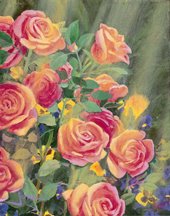
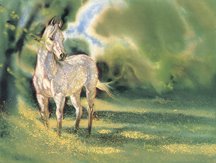
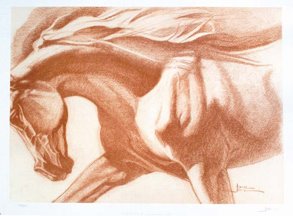
SOME OF JONI'S ARTWORK


I got all of these works from her ministry's webpages: http://www.joniandfriends.org/

Friday, June 16, 2006

JONI'S STORY: conclusion

I should say that it's been some time since I put something up here. At times, I wonder how easy it is to get so disturbed that you forget some meaningful things. Anyway, thank God we're back together. We conclude our story (at least for now) of Joni...story courtesy HISTORY WOMEN
Joni Eareckson Tada (1950- present)

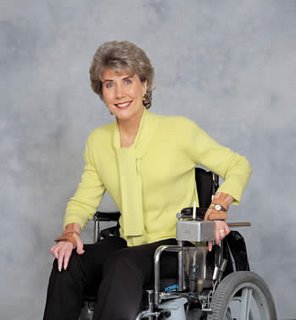
Joni Eareckson Tada is a remarkable woman. Injured in a diving accident at the age of 17, Joni has had to endure more physical suffering than most of us ever will. Though she suffered a deep depression and lost the will to live in the aftermath of her accident, she gradually came back to a deeper relationship with God. Because of her early struggles, she has become strong in her faith and is a testimony to the world of how when we are weak, God is strong. Her story is not one of bitterness and despair, as we might imagine it to be, but one of love and victory.
Joni Eareckson Tada was born in Baltimore, Maryland in 1950 to John and Lindy Eareckson. She was the youngest of four sisters, Linda, Jay, and Kathy. Her name is pronounced "Johnny", being he named after her father. Joni inherited her father’s athletic and creative abilities, giving father and daughter a special bond. Her childhood was an extremely happy one. She grew into a young adult surrounded by love, happiness, and security in her parent’s home. The Eareckson family shared a great love for the outdoors, which promoted family togetherness. They shared in various outdoor activities such as camping trips, horseback riding, hiking, tennis, and swimming.
In 1967, after graduating from high school, Joni had her fateful accident. It was a hot July day and she was to meet her sister Kathy and some friends at the beach on Chesapeake Bay to swim. When she arrived, she dove in quickly, and immediately knew something was wrong. Though she felt no real pain, a tightness seemed to encompass her. Her first thought was that she was caught in a fishing net and she tried to break free and get to the surface. Panic seized her as she realized she couldn’t move and she was lying face down on the bottom of the bay. She realized she was running out of air and resigned herself to the fact that she was going to drown.
Her sister, Kathy, called for her. She ran to Joni and pulled her up. To Kathy’s surprise, Joni could not support herself and tumbled back into the water. Kathy pulled her out and Joni gasped for air. Joni was puzzled as to why her arms were still tied to her chest. Then to her dismay, Joni realized they were not tied, but were draped lifelessly across her sister’s back. Kathy yelled for someone to call an ambulance and Joni was rushed to the hospital.
Joni’s life was changed forever that July day in 1967. She had broken her neck - a fracture between the fourth and fifth cervical levels. She was now a quadriplegic, paralyzed from the shoulders down. While her friends were busy preparing to go to college in the fall, Joni was fighting for her very life and having to accept the fact that she would have to live out the rest of her life in a wheelchair.
Joni’s rehabilitation was not easy. As you might imagine she was angry and she raged against her fate. She struggled with depression and often times she wanted to end her life. She could not understand how God could let this happen to her. Before the accident she had felt that she wasn’t living the life she should be so she had prayed that God would change her life - that he’d turn it around. After months of staring at the ceiling and wallowing in her depression, Joni began to wonder if this was God’s answer to her prayer.
This realization that God was working in her life was the beginning of Joni’s journey to wholeness as a disabled person. She participated in various rehabilitation programs that taught her how to live with her disabilities and she immersed herself in God’s Word to become spiritually strong.
Joni’s life has been a full one. She has learned early on to compensate for her handicaps. Being naturally creative, she learned to draw and paint holding her utensils with her teeth. She began selling her artwork and the endeavor was a great success. There was a real demand for her work. She kept herself very busy with her artwork and gained for herself a degree of independence. She was also able to share Christ’s love in her drawings. She always signed her paintings "PTL" which stood for "Praise the Lord".
Joni has also become a sought after conference speaker, author, and actress, portraying herself in the World Wide Pictures production of "Joni", the life story of Joni Eareckson in 1978. She has written several books including "Holiness in Hidden Places", "Joni", which was her autobiography, and many children’s titles. But her most satisfying and far-reaching work is her advocacy on behalf of the disabled.
In 1979, Joni moved to California to begin a ministry to the disabled community around the globe. She called it Joni and Friends Ministries (JAF Ministries), fulfilling the mandate of Jesus in Luke 14:13,23 to meet the needs of the poor, crippled, and lame. Joni understood first-hand the loneliness and alienation many handicapped people faced and their need for friendship and salvation. The ministry was soon immersed with calls for both physical and spiritual help for the disabled.
JAF Ministries thus uncovered the vast hidden needs of the disabled community and began to train the local church for effective outreach to the disabled, an often overlooked mission field. JAF Ministries today includes local offices in such major cities as Charlotte, Chicago, Dallas/Fort Worth, Phoenix, and SanFrancisco. The goal of the ministry is to have ten such offices in metropolitan areas by the year 2001.
Through JAF Ministries, Joni tapes a five-minute radio program called "Joni and Friends", heard daily all over the world. She has heart for people who, like herself, must live with disabilities. Her role as an advocate for the disabled has led to a presidential appointment to the National Council on Disability for over three years. Joni also serves on the board of the Lausanne Committee for World Evangelization as a senior associate for evangelism among disabled persons. Joni has also begun Wheels for the World, a ministry which involves restoring wheelchairs and distributing them in developing nations.
Joni has won many awards and commendations throughout her life. In 1993 she was named Churchwoman of the Year by the Religious Heritage Foundation and the National Association of Evangelicals named her "Layperson of the Year", making her the first woman ever to receive that honor. Also among the numerous awards she has received are the American Academy of Achievement’s Golden Plate Award, The Courage Award of the Courage Rehabilitation Center, the Award of Excellence from the Patricia Neal Rehabilitation Center, the Victory Award from the National Rehabilitation Hospital, and the Golden Word Award from the International Bible Society.
In 1982, Joni married Ken Tada. Today, eighteen years later, the marriage is strong and committed and they are still growing together in Christ. Ken and Joni travel together with JAF Ministries speaking at family retreats about the day to day experiences of living with disabilities. At the helm of JAF Ministries, Ken and Joni strive to demonstrate in tangible ways that God has not abandoned those with disabilities. And they speak from experience.

I promise to give you some pictures of her works in subsequent postings before we go on to another character.


Thursday, June 08, 2006

TRUE LIFE STORIES part two: JONI EARECKSON TADA

THIS IS FROM MY DEVOTION THIS MORNING
When God calls you to do something, His call comes in several ways
  1. You feel moved. There's a moment of certainty when God puts His hand upon you, nudging you toward a particular need, usually an unmet one. You know it in your knower.
  2. It's confirmed by others. People will discern that God's at work in your life. People who know you well, watch; they volunteer comments such as You shine when you're doing that; You're at your best when you....
  3. You'll be gifted to do it. There are times when a person starts off with seemingly no specific capabilities at all, but this is rare. With a call comes giftedness, that special empowerment God gives to the callee. When you're in your calling, you soar in spite of obstacles. And people tend to stand back in amazement. Ever seen Joni Eareckson Tada speaking to an auditorium full of people in wheelchairs? The whole place comes alive when she rolls up to the microphone in her wheelchair.

I'll stop there though that's not all. But I just wanted to underscore the fact that one can still find and fulfill a calling in spite obstacles. Today, Joni has live a quadriplegic for many decades, yet she transforms lives. What's that SCAR you think you have? Take it to the cross and leave it there. Consciously press ahead. See you in the next part...